Showing posts with label Books. Show all posts

Sunday, 31 January 2010

GIRAFFES' CLAWS AND OTHER SPICY THINGS

Tim Flannery is an Australian scientist, explorer and writer. Even so, there doesn't seem to be a single website that does justice to the whole man. He was Chairman of the Copenhagen Climate Change Council and must have been very disappointed by its outcomes. I would like very much to read his account of it all.

As an author he fits more into every sentence than any other writer! That is why I am only reading the second page of his book "Throwim Way Leg" and already have discovered some extraordinary things about geography, history, culture and cloves..... yes cloves, the spice we all know so well. (In France we finally discovered the French name for it was clous de giroffles..... or giraffes' claws! When you think about it, I guess cloves could refer to cloven ie clawed, in English.... I wish we had thought of that when we were standing at the spice section of the supermarket in France!)

Anyway, back to the book..... It seems that this funny, prickly little fellow (the clove..... NOT Tim Flannery!) is the dried flower bud of a lilly pilly that only grows on islands just to the west of New Guinea. The ancient Romans flavoured their food with cloves which must have come from those remote islands.... amazing.

And did you know that they have kangaroos in New Guinea, only they live in trees! And that nine thousand years ago New Guineans living high in the mountain valleys had already developed intensive agriculture where they grew sugar cane.... amongst other things. Even today there are no roads connecting the country because it is so rugged and, because they have no pack animals, walking is often still the norm.  One sixth (about 1,000) of the world's languages are from New Guinea because of the isolation of the peoples.

Tim Flannery's book "The Future Eaters" I would put up as one of the best books ever written on human civilisation and how it is eating itself into oblivion. This was written way before climate change and carbon credits and water issues were in the public mind and certainly started me thinking seriously about how I, as a human, fit into this planet. Then there was "The Weather Makers" which was a very early publication on climate change and what it means. He write so well, so clearly and fills the pages with such fascinating and inspiring images that you could never find them dry or boring. Neither does he speak down to you though, nor make silly, frivolous comments..... unlike me, I am afraid! His books are all listed and discussed here.

Now I am up to page 3....

Wednesday, 13 January 2010

A NEW BLOGGER IN TASMANIA

Often people ask me what is my favourite gardening book. This is a tricky question to answer because, as many readers of this blog would know, I am a little bit outside the square in my ideas and I wonder whether this person means a reference book, like Oriental Vegetables by Joy Larkom, something inspiring for the beginner like Backyard Self-sufficiency by Jackie French or something more meaty like Permaculture One by Bill Mollison and David Holmgren.

There is, however, a book that is all of these in one.... easy to read, inspiring, philosophical, Australian and full of wonderful ideas and information. It is Beyond Organics, by Helen Cushing. Luckily for us, Helen has just started a blog, called Gardening with Helen. Here is an excerpt from Nasturtiums are like Teenagers.......

If you have nasturtiums in your garden, you will know what I mean when I say they are a plant requiring a relationship with their gardener.

I am a great fan of the nasturtium, but let’s just say they regularly test the friendship. They are a sort of teenage plant – lots of life, energy and beauty, but unsure of their boundaries. Or perhaps more accurately, uninterested in their boundaries....

.....There is another patch by the veggie bed. As an organic gardener and nature conservationist I believe in having a ‘living mulch’, maximising the habitat, protecting the soil, growing biomass etc – I’m sure you know the reasons. But as with teenagers, so with living mulch/nasturtium. The relationship must be interactive to achieve best results. Neglect means loss of influence (otherwise known as control), blurred boundaries, the need for a firm hand at a later date. Recovering the veggie garden from the enthusiasm of nasturtiums is more an act of archaeology than gardening.

She explains in her introduction.....Hope someone likes whatever it is that evolves here – it will be a rambling garden of words, of that you can be sure! Let me know if you enjoy it, and if you have any gardening questions, try me.

Helen is new to the whole blog thing so go and say hello, and leave a comment, she is our new neighbour! I have put a link to her blog in the side bar, under Tasmania.

Monday, 4 January 2010

SUMMER....READING ON THE VERANDAH, LISTENING IN THE CAR AND WATCHING ON TV-ish

It is an absolutely perfect summer's day as I sit outside at my little mosaic table with my laptop cord plunging unceremoniously inside through the dog flap in the wire door to the power socket in the laundry! Behind me are my two deliciously delicate begonias, meekly displaying sprays of pink and red flowers on tall, elegant stems, and nodding gently in the cool breeze to the raucous laughter of two local kookaburras. It is hard to concentrate on my writing with these 2 comedians laughing so loudly and unselfconsciously from the branches of a gum tree, only about 10m away from me. One even had what looked like the last thin15cm of a snake hanging out of its mouth at the same time as it was sharing a joke with the other. Now that is something..... Hang on while I go and get my camera.......

While lazing about at the shack, without technology, I read 2 lovely books, both of which happened to be by Australian authors and set in Australia. Kate Grenville's: The Lieutenant is an historical fiction story of an astronomer accompanying the First Fleet's arrival in Australia in 1786, and his close association with some Aboriginal people. This book begins slowly and seems scant and superficial at first but it is worth getting into and develops well, leaving you wishing for more. The other, Amanda Hampson: The Olive Sisters, is set in modern times and is a rare treat of a book, captivatingly telling the story of some Italian ancestral discoveries made by a woman escaping a failed city life..... sounds corny.... but is oh so well written and complex.

In between these, I drooled over Juleigh Robins: Wild Food.... 100 recipes using Australian ingredients. Here is a little taste of Juleigh's introduction, which tells how she and her husband came upon bush tomatoes grown by an Aboriginal community, about 20 years ago.....

....About 2 weeks later, 20 large boxes of all sorts of native foods arrived. Ian and I were like kids at Christmas, and eventually we found the much sought-after bush tomatoes in box number 5, labelled 'katyerr' in the Anmatyerr language. I immediately rang Janet and Rita to thank them and see if some more of these marvelous fruits could be harvested for us..... we said please send as much as they could harvest - after all, how much could anyone gather out in the desert? It couldn't be more than 20kgs, right?..... Shortly afterwards we took our first delivery of 2 tonnes of bush tomatoes!

I am so looking forward to making some of the foods, like bush tomato (solanum centrale) and roast pumpkin risotto, and fig, fetta and pomegranate salad with wild rosella (Hibiscus sabdariffa) and pepperberry (Tasmannia lanceolata) syrup, and wild lime (Citrus glauca) friands.

The ingredients are available through Robins Foods (branded Outback Spirit), in partnership with Indigenous Australians, and are sourced from pristine wilderness areas from the Top End and the Central Desert and from rainforest, alpine and temperate coastal regions of Australia. A guide to retail outlets is included. There are even growing instructions for those of us keen enough to seek out plants for our gardens. 

In the car, on the way to the shack, with no interest in the cricket which was on my favourite station, I was searching the radio waves for something  worth listening to and came across Radio National's The Book Show and later, The Science Show. Now, I am not much of a fan of Radio National on the whole..... full of discussions about classical music minutiae and interviews with artists and dancers and poets .... all much too much about people, for me. But, this particular day I happened across a talk (related to his book) - Nicholas Stern: Blueprint for a Safer Planet.... and how it related to economics and Copenhagen. It sounds rather dull but he is a superb speaker and it is well worth listening to since the whole Copenhagen thing hung very much on his report. (Coincidentally, son Alex also happened to hear this talk.... but he was there in the audience, in Oxford!)

On the way home from the shack a few days later, once more in the car, I tuned in to an hour long reading from Tim Severin: The Brendan Voyage , again on Radio National 729. I absolutely loved the idea of rebuilding a boat out of ox hides and seeing if it could be sailed from Ireland to what is now the USA, by an Irish monk hundreds of years ago.....

The illuminated manuscripts that recount the epic voyage of the sixth century saint Brendan from Ireland west across the seas to an unknown land were long considered apocryphal. But explorer, author and film maker Tim Severin was fascinated by the story they told, and after painstaking research managed to build a replica of a sixth century curragh just as the monks of medieval Ireland would have sailed, and set off to cross the Atlantic. With her small crew, the Brendan - forty nine ox hides stitched over a wooden frame - survived pack ice, storms and inquisitive whales to eventually reach Newfoundland, and prove that it would have been possible for St Brendan to have done so also, thus reaching the New World many centuries before Christopher Columbus.

Having discovered some good things I am hooked on Radio National and have listened to many interesting talks, so often in the car, but also online where the manuscripts and audio are readily available. Lord Bob May: The evolution of cooperative behaviour and Martin Rees: Controlling the Future  are two from this week, both of which I want to write about as they are so stimulating and thought-provoking.

Barb rang me this morning and reminded me about Landline, on ABC TV. Langhorne Creek.... home of Newman's Horseradish

.....while fads will come and go, some traditional spreads are finding new favour in a range of dishes - take the humble but fiery horseradish. This root vegetable began life in Germany, but according to second generation horseradish producer Brian Meakins, when the root vegetable's name was translated into English, a Frenchman botched the job, and what should have been sea radish ended up with an equine identity.

Brian grows and processes Newman's horseradish beside South Australia's Lower Lakes, his father having been given permission to use the name by Fred Newman back in 1947. The Meakins have ten hectares under production, from which they harvest 30 tonnes of horseradish to process and sell to supermarkets and communities around the country.

Then of course there is ABC TV's iView where, for 14 days, you can watch all those things you didn't know were on until someone said "Hey, did you see that great show on TV...." but of course you didn't know and missed! I watched a wonderful thing about a man who wanted to make the world's best chocolate so he sold his home in England and went and set up a cocoa bean farm in South America....

And then there is East of Everything...... Like Sea Change, but about some pretty cool brothers in their 30's / 40's, who inherit a sort of hippy beach resort at Australia's eastern most point. I love Art.... he is complex, creative, romantic, interesting, difficult and attractive. Is there anyone else like Lizzy? 

So, when it's too hot to go to the beach or be in the garden, fill your days with the wonderful world of words.....

Wednesday, 7 January 2009

A STORY OF THE WIND

It was time to start reading a new book. I have finished and enjoyed "The Private Patient" by P.D.James and also a wonderful book that I found in a second hand shop in Moonta, called "Spice Travels" by Ian Hemphill. He is a spice merchant from Sydney whose passion for spices has led him all over the world in pursuit of knowledge about the growing and processing of every spice on earth. So, I had 2 choices left, both recommendations from son Alex. First "The Ancestor's Tale", nearly 700 pages of Richard Dawkin's fascinating and beautifully written book on evolution. Second, "A Short History of Myth" by Karen Armstrong.

I have read about half of the introduction of each....and here I am thinking about humans being meaning-seeking creatures who conversely also have an imagination that allows us to think of things that have no existence. It is going to take me a long time to digest both of these books at this rate! As I gaze out of the shack window, while my mind considers facts and myths, the fact that is most noticeable is that the wind is coming up yet again while Roger imagines the feats he could achieve windsurfing, now that Langmuire has arrived.

The wind wriggles into life in some most interesting ways. Some of them are universal, some local. Some are obvious, some only observed by crazy people like me who seek both the real and the myth. Some beneficial, some not, but all a very real part of existence for every living thing on earth. So, who is Langmuire?

DSC_0001-4 As the wind strengthens, it has various universally understood effects on the water beginning with ripples and waves and progressing to what we call white-caps (or white horses) from about 10 knots and then white foam forming in lines directly downwind at about 15 knots. I cannot explain the scientific reason for these white lines but I do know they are called Langmuire's Circulations, after a Mr. Langmuire. In my photo at left the white line cuts across the sea just below the writing.image


In the photo at right you can see that the lines extend downwind of the reef.

This is the point at which Roger goes windsurfing as he knows there is enough wind and he can see the direction, without even going outside.....thanks Mr Langmuire! 


Before Mr Langmuire visits, though, other things happen..... the horizon turns from a soft blue, blending perfectly with the sky, to a sharp, dark line heralding the arrival of the afternoon sea breeze. If I am walking on this beach on a still day, before the sea breeze arrives, it is totally silent, as where I walk is very shallow and there is not even a ripple on the shore sometimes. There are no roads for many miles and rarely any people.... just the pure, pristine sea, and me. As the wind begins to rise, I can hear it far out at sea. It is quite beautiful and unreal to hear the wind in the distance but it be completely still where I am standing. As the first tiny flutters of breeze erratically approach the shore, the movement of the surface of the crystal clear water reflects on the sand below and makes delicate patterns, like light glistening through thousands of pieces of glass. It is quite breath-taking.

These first breaths bring pockets of air from who knows how far away. Some are hot, some cool and eventually they mix to form a  breeze uniformly cooled by its drifting across the sea. Even on a hot day, the air doesn't need to travel far across the sea to cool down or far across the land to heat up. Just sitting in the shallows instead of further up the beach makes a hell of a hot day into a pleasant one.

Just before Mr Langmuire arrives though, sand and seaweed start to blow along the beach, the windows start whistling, it becomes a challenge to sit outside and read without losing your hat and the local gulls start playing in the wind.They flap upwind for a while then turn like an acrobatic plane and shoot down the beach at break neck speed, without so much as one flap of their wings. They do this over and over on windy days, especially the larger, darker gulls, who also use the wind to hover as if in a windless cage, just outside our window, even in what seems like a gale, showing us just what nature can do, unaided.

image

image


Nature does very well when left alone..... here are a couple of recent examples.

Wednesday, 10 September 2008

eat, pray, love by Elizabeth Gilbert


Yesterday I had a memo from Unley library to say a book I had requested was now available for me to collect.
I had forgotten I had ordered it.
I remember someone recommending it through their blog, but who and when?
My first blog to search would be Pattie's FoodShed Planet and sure enough those 3 words eat, pray, love appear in her post list.
And it was just over a year ago that Pattie spent 3 days in a hammock and ate and prayed and loved her way through this book.

You could look up FoodShed Planet to read Pattie's comments.
Pattie says this:

"Although not a professed foodie or localvore, Liz does celebrate the unique beauty of local food throughout this book. The first question she asks in every town in Italy she visits is "Where can I get the best meal?" And it's always a celebration of local traditions and tastes, as well as a powerful way to connect with people. In India, she eats daily vegetarian meals at the Ashram at which she's staying, and Indonesia is full of healing food."

The first section of the book, eat, takes place in Italy.
Pattie says the book mentions local food, page 45 mentions roasted endive and on page 61 I notice the author is offered homemade limoncello.

Sound a bit like someone we know? who says she is always hungry.

HAPPY TRAVELLING KATE

So as Kate is about to spend quite a few hours flying around the globe I thought she might like to look out for this book.

If I am too busy reading to come back on line, have a fantastic trip Kate.

We will look forward to hearing all your tales and gardening experiences with our distant gardening bloggers.

And yes we shall grow some seedlings for your summer garden.

Have fun Kate, we shall miss you.

Friday, 6 June 2008

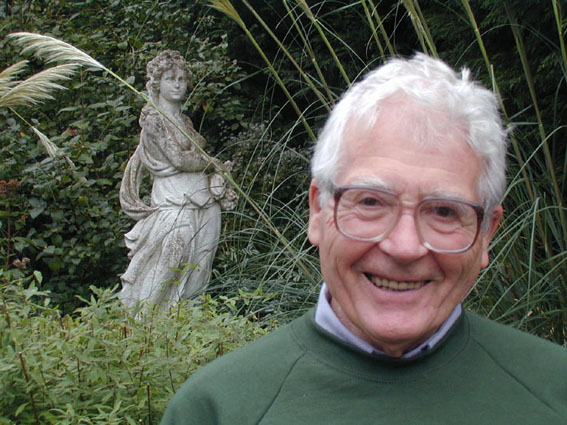
James Lovelock and Climate Change


Last July we heard James Lovelock speak at the Adelaide Festival of Ideas (a Biennial Event).
He spoke of his Gaia Theory and his predictions for our planet.

James talks about some pretty scary stuff and that we better enjoy life while we can.

Please read this article by Decca Aitkenhead or go to James Lovelock's website or read his books.

Monday, 5 May 2008

THE AUSTRALIAN SEEDSAVERS HANDBOOK

I am re-posting this because at the time I wrote it I posted so much stuff it probably wasn't read. I have added more too.

I don't know why I haven't read every page of this book by Michel and Jude Fanton before. Rather, I have previously just skimmed through it and picked out what information I was after at the time. Over the ANZAC long weekend I read it from cover to cover here are some useful pages I would like to share:

Chapter 4 on purity and production gives 5 useful observations, after explaining about self- and cross-pollination and the presence of dominant genes :
  1. Two different kinds of lettuce will typically cross from 1 - 5 %
  2. A tomato will cross with a tomato from 1 - 5 %
  3. A capsicum will cross with a capsicum from 9 - 38% depending on variety
  4. Hot chillies will typically cross up to 4 times more than sweet capsicums
  5. Okra crosses from 4 - 42% depending on variety

Chapter 5 on selecting and collecting is also excellent and here are some tips I thought useful :

  1. First of all it is written by people who, like me, can be in love with their vegetables -"gardeners who are in love with a particular variety and who intend to save seeds regularly should decide how many plants.." they need to keep for the purpose.
  2. The aim is to maintain a fair degree of variation. This is essential for the crop to adapt to changes in soil, cultivation methods, latitude etc etc Don't just select for one characteristic exclusively.
  3. For self-pollinating plants such as tomato, lettuce, bean or pea only 1 - 6 plants need to be reserved. If you intend to save the same variety year after year you must save from several plants.
  4. For cucurbits such as pumpkins, melons and cucumbers they recommend at least 6 fruits, preferably from different vines, be kept, if possible.
  5. The female parts of broccoli, kale, mustard and turnip have a chemical barrier to pollen that comes from the male part of the same plant. Therefore, you must let more than one go to seed to collect viable seeds.
  6. Fruits that have seeds in pulp, like tomatoes and eggplants etc should be picked when the fruit is turning soft - ie after the stage at which you would eat it.
  7. For fruits eaten mature eg capsicums, pumpkins etc pick as for eating or soon after.
  8. Fruits picked immature like cucumbers, okra etc must stay to reach full size plus another 3 weeks for seeds to mature.
  9. Where seeds are the part you eat eg broad beans, corn, sunflowers they should be left to completely dry on the plant.
  10. For plants whose seed pods tend to shatter, like lettuce, carrots etc harvest as they become ripe or even tie into a bag to catch the seeds.

I said to Roger, at page 34, "This book is getting so exciting! I wonder what's going to happen next!!" We laughed uncontrollably for some time; am I crazy to find this more exciting than fiction? I have told this to a few friends and get a smile....until yesterday when I said it to someone who grows everything, like me, and she laughed so much and I laughed all over again and we both couldn't stop.Nice.

In chapter 7 are some suggestions to avoid crossing:

  1. Separate varieties of lettuce by a tall crop.
  2. Separate tomatoes by a row of beans on a trellis.
  3. Beets will cross - ie silver beet and beetroot and those coloured-stem varieties that, for some reason, are labelled as (rainbow) chard.
  4. Basically, grow only one variety of watermelon, one rockmelon, one cucumber, one squash and one pumpkin.
  5. Stagger the sowing of corn to early September, the early November and then early January, if your growing season is long enough.

Many older pumpkin growers in Australia agree that a three year old seed gives more female flowers than a fresh seed. This is worth trying as it is a constant irritation, isn't it, and pricking off the growing tips and so on only works to a limited extent, in my experience. More often it is just luck of the draw so maybe this is why. Buy seed today and wait for 3 years to sow it - I am going to try this. One self-sown butternut style pumpkin of mine has had 99% female flowers this year and barely a male. I have never heard of that happening before.

The Seedsavers Handbook can be ordered online from their website.

Wednesday, 30 April 2008

THE SMALL SOLUTION FOR THE THIRD WORLD FOOD CRISIS

ps Did you see the interview on Dateline tonight (Australian broadcaster ABC TV 9pm), with George Negus and Dr. Raj Patel? It was on this very topic and was very specific about what must happen to ensure food supply equity is restored ASAP to those who cannot afford to pay more for food produced with absurdly high inputs derived from oil. Nice to be backed up by such a well-respected and well-spoken authority, instead of always having my neck on the chopping block! But! Why has it taken 7 years? And are these just more words? Here is another interesting article high-lighting the seriousness of the problem for peasant and farmer-based food growers.

When I got up this morning I decided I wasn't going to write anything today. Nothing. NOT A WORD. Mostly to give my eyes a rest. I have always had great eyesight but...shut-up Kate. OK. I have only been sitting here for 5 minutes, reading, and that is enough to start me off again. I wrote some notes while at the shack, from a great series of articles I read in the October 2001 edition of 'Slow' - the magazine of the Slow Food movement. If you can, I would highly recommend reading it. I guess it is more of the same but it is about food security for the developing world, this time, and includes some excellent research with some facts and figures to mull over. Why, when it was published in 2001, nothing has been done by now in 2008 (as far as I know but that's not a fact) is testament to the western world's addiction to making money at any cost.

If we think food is getting expensive and things are disrupting our normally manageable lives, just take a few minutes to think about people in the third world who, on the one hand, have often had culturally rich and happy lives but, on the other, are now losing their self-reliance as big agri-business seeps like a cancer through their innocent lives. The majority of the several billion people on this planet are not part of an affluent society and do place food security at the top of the list of importance for their families. They have always - and that means for thousands of years, thousands of generations even, saved their seeds and grown their food in their home gardens. This is what a family must do - just a part of their lives - in addition to working their fields or having another job to have something to trade for money or other goods and services. Primarily it has been the women who have taken the responsibility for this seemingly simple and yet vital activity. From a small piece of land they are able to intensively harvest nutritious meals day after day from a diverse range of plants and a few chickens or other small animals. We all know how little space you need and how much you can grow.

In some parts of Africa more than 100 food crops are regularly grown among the cash crops, as food for the small-scale farmers. A study in Nigeria found that home gardens occupying only 2% of a household's farmland accounted for half the farm's total output of food. In Java, villagers cultivate at least 600 recorded species in their home gardens. Such massive gene diversity ensures food security during drought, storms and changing weather patterns as well as rising oil prices and so-called Free-Trade agreements. Nutrition supplied by the variety in these diets is responsible for maintaining a reasonable level of health, free from some of the insidious western diseases such as heart disease, diabetes and cancers.

In a mono-culture there is no such diversity nor is there the intensity. However, agri-business can rightly claim that an area planted with, for example, rice will reap a certain yield per acre. Since no official figures have been collated concerning the small vegetable gardens dotted about in a village nor any notes taken on the nutrition provided or the biodiversity present, these plots are rendered invisible and are not considered as part of the GDP, on paper. And of paper there is plenty when a large company proposes to install a huge mono-culture, over all this land. The villagers are attracted by these foreigners who are promising increased incomes and standards of living for the poor farmers and, in most cases, they readily accept the deals with the blessing of governments who see the growth in commercial agriculture as improving their GDP.

This makes me cry with shame - how can we westerners allow this to happen? We are quite pathetic - you, me, all of us. We can see it won't work but we do nothing to stop it. These lovely people lose their food security overnight. They become tied to a system of agriculture that requires huge inputs of chemicals and oil to sustain it and they become slaves to the company and to anyone who will lend them the money to buy the chemicals and fertilisers and the seed to grow a crop specified by the agri-business. Their food crops disappear, often becoming lost forever. The huge bio-diversity previously supported by their gardens - of plants,birds, insects, even fish and reptiles, are literally chewed up and annihilated causing large infestations of pests which now can reach plague proportions because of the lack of species able to keep them in check. The people, in one generation, often become destitute and aid workers step in to try to at least feed people whose crops fail in a drought or flood or because they can't afford the chemicals. A once proud and happy village becomes a tangle of infighting, disease and depression which can lead to suicides and total collapse. I prefer to call it pre-meditated murder.

It may seem a long shot to draw comparisons between third world experiences and ourselves in Australia but this failure to notice the small, in favour of the huge, is a cross-cultural problem. Let's take a person who grows half of their family's fruit and vegetables.This has an extensive list of benefits to the family's health and that of the planet. It keeps the gardener fit, provides the best possible nutrition for the family, maintains and improves soil health, decreases the family's carbon footprint, is water efficient compared to broad-acre production, recycles all nutrients back into the soil, reduces landfill by removing green waste from rubbish, reduces CO2 emissions as a consequence of reduces food miles, teaches children about many things not the least of which is where their food comes from, lets them connect with the earth and so on.

However, none of this seems worthy of mention or consideration when policies are made regarding how a country should tackle obesity, greenhouse gas emissions, water shortages, mental health, feeding the world, bio-diversity or any other of today's problems within our country and in other parts of the world. Recently I read that it takes about 5,000 litres per day per person for food grown by conventional agricultural methods! If I had that much water I could grow food for, let me see...that's about 1,600,000 litres per year....at least then 10 people probably double that plus have enough for the rest of my garden and for indoor use. Big business steps in with huge plans - build pipelines, import more doctors, more engineers, more tradespeople, make farms bigger, introduce genetically modified crops, store our carbon emissions underground, grow crops to use for fuel. In short, destroy more to solve less.

The absurdity is so obvious and has its roots in the false premise that big is better. However, big problems occur where only big solutions are sought, it seems to me. Most of the above problems are enormous because no-one thought to look at what individuals could contribute, each in their own, small way. Disregarding the small is fatal. Each bee, ant, fish, bird human must be allowed and encouraged to participate if the whole is to survive. If each individual takes some responsibility then the sum of the total will be greater than that of the parts allowing harmony to have a chance to be established, as in the case of the example of the third world gardens. Basically, we can play as an orchestra or as a machine. As members of an orchestra, each gives of themselves for the benefit of the whole group as well as for the listeners, composers, instrument manufacturers, venue operators, ticket sales offices and so on. Small, united groups; big effect, and in charge of their own destiny. If we act as individual cogs of a huge machine, on the other hand, we are powerless to do other than follow the leader with the result being we take no responsibility for the workings or direction of the machine and simply use it as a means to climb the corporate ladder for personal gain.

If all people who grow their own food could stand tall, shoulder to shoulder, we would stretch around the whole circumference of the globe and could become a group prepared to orchestrate change not just for ourselves but for the whole of humanity and life on earth because we would be playing in harmony with each other and at peace with the world. Somehow we have to not just sit here and write stuff, we have to get out and sing together!


A little bit of Action in my life,
A little box of Seedlings by my side.
A little bit of Help is all I need,
A little bit of Hope is what I see.
A little bit of Dancing in the sun,
A little bit of Thinking all night long.
A little bit of Email, here I am,
A little bit of This makes it sound grand!
Mambo number five.


One of my lovely tuberous begonias to brighten a rainy day and a bowl of red capsicum soup to warm the cockles of our hearts.

Thursday, 21 February 2008

Taking Tea in the Medina

This would have to be one of the most beautiful cookbooks ever!

taking tea in the medina by Julie Le Clerc and photographs by John Bougen & Jule Le Clere.
You must check it out at your local bookstore or library.

The recipes are well set out (one per page), they are easy to prepare and do not contain too many ingredients.
They also have large photos of what the prepared dish will look like.
And heaps of the ingredients will be growing in your garden at the moment.

Ok, so I shall mention a few recipes to tempt you:
courgettes with mint, okra in tomato sauce, pickled tomatoes with spices and red wine vinegar, Kuku- a parsley omelette, red pepper and walnut paste, smoky eggplant puree with garlic and mint, zhoug-a hot coriander and chilli relish, kutap-flatbread with herbs or pumpkin, carrot or watermelon jam and maybe some chocolate dipped figs and dates on crystallized rose petals or some baklava with cardamom.

Well! its time for me to grab a handful of fresh mint from the garden, make some mint tea and then maybe make an Um Ali - a classic pudding with pistachio nuts, raisins, milk, honey, cinnamon and whipped cream.

Sunday, 20 January 2008

Computer Recycling


The Unley Computer Share Project is a local initiative. Unwanted computers are collected and volunteer technicians prepare the computers for re-use.
These computers are provided free if you need a computer.
For further information
phone 8272 5881, or
email eddiecl@adam.com.au

Tuesday, 15 January 2008

SUMMER READING

I read a few great books while I was away.

The most special is one called "The Education of Little Tree" by Forrest Carter. It is an autobiography written as a story about a little boy who goes to live with his Cherokee grandparents when his own parents die. I have marked several pages that I found especially poignant but to reproduce them here would sound so flat. The Cherokee live as a part of nature, only taking what they need. The old granpa teaches the boy how to live in the mountains of Tennessee and it is a book I will always cherish.

The next book is one by Joy Larkcom called " Oriental Vegetables - the complete guide for the gardening cook" . It is the culmination of many years of work, including growing many of them herself, travelling all over Asia to see many growing in their places of most use and research into the origins of them. It clarifies the common names of the vegetables as well as providing the botanical names. There is a wonderful section on cooking and a comprehensive section on growing them. All in all, the best book on Asian vegetable cultivation and use I have seen.

Third would be "Community Gardens" that I borrowed from Barb. It is real tear-jerker when you read of the hardships some people faced before arriving in Australia and the reasons why they have a patch in a community garden. They also talk of their vegetables and give recipes for them. There is a great section on the vegetables - giving descriptions and growing methods as followed by the gardeners themselves.

Another is a book called "Beyond Mombasa" . It is historical fiction about the building of a railway across Kenya and follows the life of a young couple who discover the real Africa of the late 1800's, as the husband takes on the job of chief engineer. The descriptions are heart-felt as the author has spent most of his life in Africa and written other works set there. The characters are realistic and I enjoyed learning about something new.

Wednesday, 26 December 2007

My Best Ever Present


After a busy day preparing lunch and cleaning up I sat down last night to look at a book my son and his partner had given me. The title is Community Gardens written by Penny Woodward and Pam Vardy.
It is a Celebration of the people who participate in community gardens in Australia.
As the back cover says "let the people be your guides, their touching stories of the events that brought them from more than 20 countries to Australia".
The book contains many unusual edible plants and the homeland recipes of these extraordinary people.
Have you ever grown Orach or Perilla or Purple rice plant or Molokhia or Malabar spinach or Long-leafed coriander!
Community gardens in inner city areas give people a place to connect with others, a place to grow some vege's and their favorite herbs, a place to relax and connect with the joy of the soil and what it can grow for them.
As Peter Cundall says in the foreword " it proves beyond doubt that the most precious resources of any country are always the people and the soil".
Check out your local library if it does not have a copy ask them to order it in.

Wednesday, 12 December 2007

HOLIDAY READING

There are a couple of magazines that I subscribe to these days and I so look forward to them coming. The first is called SUMPTUOUS but this is not a good name as it is a magazine entirely about South Australian food and wine - the growers, cooks, shops and activities, like crabbing. There are a few recipes but I love it because I get to know all about who the local producers are and where I can get their stuff, what shops or market stalls are opening and who the people are who are going to run them, and inside looks at things like the Adelaide Produce Market, at Pooraka, where all the trading is done between the growers, wholesalers, retailers, processors, transporters, exporters, restaurateurs etc. In the latest edition, Deb's berries at Nirvana are mentioned in the page on 'The Best of the Berries'. It is a pretty glitzy magazine now - it wasn't at first - but at least it is 100% local content .

The second subscription is for the ABC's ORGANIC GARDENER . The editor, Steve Payne, pulls no punches and it is great that the ABC allows people to express their views so freely as the articles are often very critical of the government's ineptitude at tackling things like salinity, the drought, climate change, large-scale agriculture etc. It is a wonderful thing about Australia that we can and do voice our opinions loudly, even in a magazine subsidized by the federal government itself. This is a generalisation, I know there are exceptions.

I feel an allegiance with Steve Payne and his passion for the care of our earth and its people as well as his insistance that plants are the solution, not the problem, and gardeners are being unfairly targeted by ignorant politicians, during this drought. I have been thinking of adopting this little quote that I heard someone (not Steve) say on the radio recently, as it says it all, in one neat package. (I feel another blog item coming on, when I have the articulateness (?) to do it justice which is obviously not now!)It is obvious by the title that the magazine focuses on organics - at home, on the farm, and elsewhere in the world. Although I don't believe in buying many products, organic or not, at least all the advertising is relevant to the readers and means we get the magazine at all.

The Jan / Feb edition mentions a book that I would like for Christmas, called COMMUNITY GARDENS. The book tells the stories of community gardeners drawn to Australia from more than 20 countries and the reasons they came here. It describes the plants they grow and the uses and recipes for them. It brought the judges (of the Australian Horticultural Media Association Award 2007) to tears - oh no, I probably won't get past the introduction without a hanky! This edition also mentions the fact that France's new president, Nicolas Sarkozy, is introducing radical plans to cut pesticide use by half, suspend GM crops, freeze the building of new motorways and airports. The aim is to tax pollution more and income less. Thank heavens someone is taking a lead.

Saturday, 22 September 2007

ANIMAL, VEGETABLE, MIRACLE

Recently I spent every spare minute of a 3-day holiday reading this book that Roger gave me for my birthday, back in July. Previously I had thought it would just be stuff I already knew, made less relevant for being American. Having time to savour something is always so rewarding and so I really got into this account of a USA family that took on the challenge of eating home-grown / seasonal/ local food for a year. Each member of the family contributes to the chapters and I love reading about the little girl and her chickens as well as the teenage girl and her views on what is going on and why. The main author, Barbara Kingsolver, writes beautifully but this is not a fairy story and it tells it straight,warts and all. Her husband adds lots of research and facts (as husbands are wont to do). The first 1/3 of the book has a lot of background about many issues such as pasture vs feedlot meat, global transport of food, farm size etc etc and really sets the scene and explains how they came to realise that life is taking some terrible turns.

Once they immerse themselves in the rolling seasons and the challenges they bring, the book comes to life.They begin to settle in to getting to know the people at the farmers' market and their neighbours and realise that this is how it is meant to be. Someone tells Barbara she is a "real housewife". She comments "It has taken me decades to get here, but I took that as a compliment".

The deeper they look into issues the more complex answers become. For example, in a discussion on vegetarianism she points out that "every sack of flour and every block of tofu came from a field where countless winged and furry lives were extinguished in the plowing, cultivating and harvesting. An estimated 67 million birds die each year from pesticide exposure on US farms....." Butterflies and other insects, foxes, rabbits and so on are starved out of their homes or dismembered by harvesters and plows. Many of the world's poor live on land that cannot support plant-based agriculture and only those that live where rain is abundant and the weather suitable, can have the luxury of choice.

I love this quote from the book "Cooking is 80% confidence, a skill best acquired starting from when the apron strings wrap around you twice." (I started my boys off then and now they can and do attempt to cook anything.)

All in all a lovely read and, I understand, Pattie from the Foodshed has been to a talk by the family, on their experiences and I look forward to her interpretations too. What a coincidence.